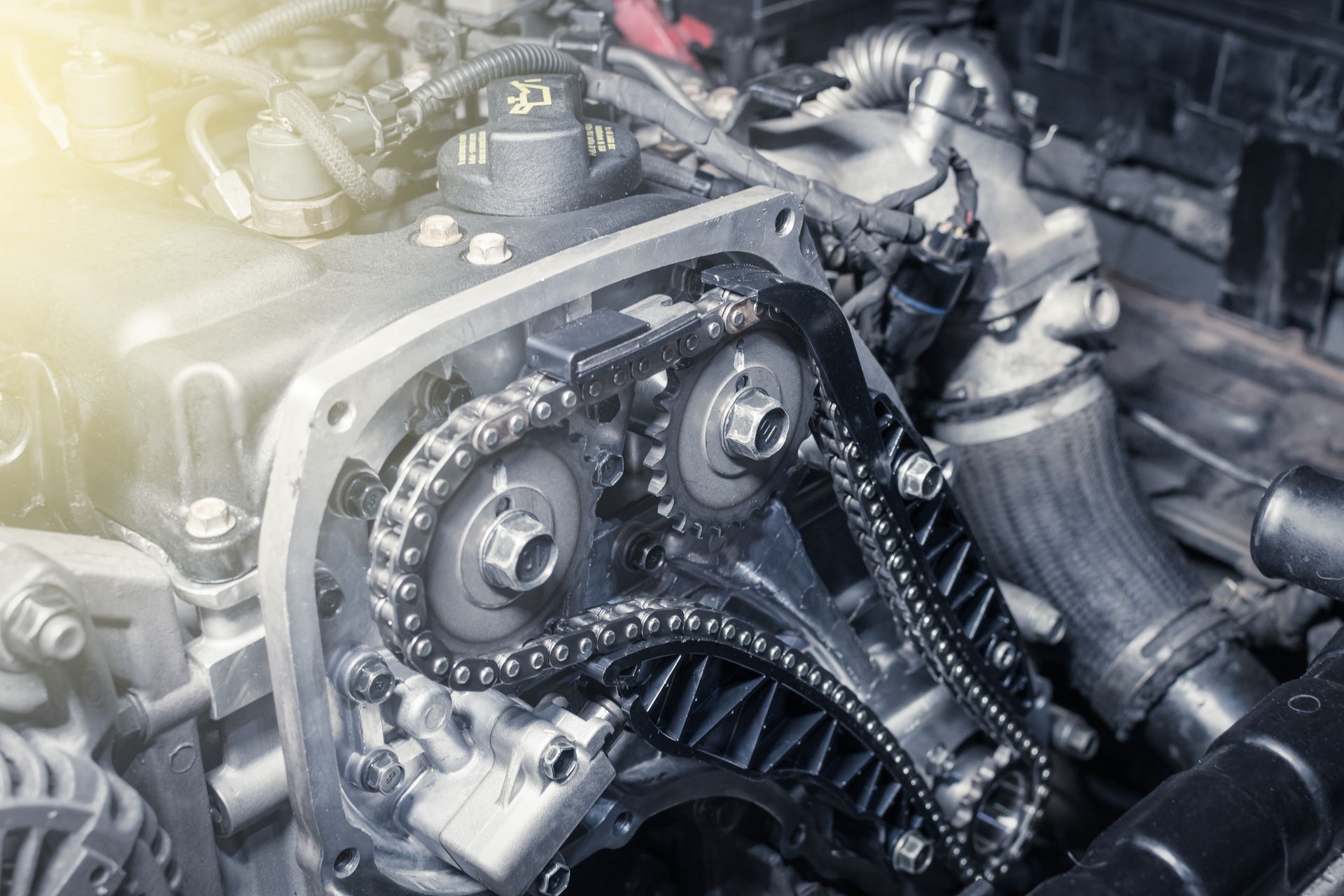
Timing belt service involves one of the most tightly packaged areas of many engines. Reaching the belt can require removing covers, accessory belts, brackets, engine mounts, and other components before the timing system is fully accessible.
Once that area is opened, several related parts become much easier to inspect than they are during ordinary maintenance. Some have also accumulated the same mileage and operating time as the timing belt, which makes the service an important opportunity to look beyond the belt itself.
The Timing Belt Tensioner Is Commonly Replaced
The tensioner keeps the timing belt at the correct tension while the engine is running. If the belt becomes too loose, it can jump teeth on the camshaft or crankshaft sprockets and change engine timing.
A worn tensioner can also create noise, excessive belt movement, or uneven belt wear. Because the tensioner has already accumulated the same mileage and heat cycles as the old timing belt, replacing it during scheduled timing belt service is often a sensible preventive step.
Idler Pulleys Should Be Checked Closely
Timing belt systems often use one or more idler pulleys to guide the belt through its correct path. These pulleys contain bearings that spin whenever the engine is running.
Bearing wear can eventually create roughness, noise, or looseness. If an idler pulley seizes, the timing belt can overheat, shred, or break. Installing a new timing belt while leaving behind a questionable pulley can therefore put the new belt at risk.
The Water Pump May Be Replaced at the Same Time
On many engines, the timing belt drives the water pump. When that design is used, reaching the water pump may require removing most of the same parts needed for timing belt replacement.
That makes timing belt service an ideal time to evaluate or replace the pump, especially if the manufacturer recommends doing both together. A leaking or seized water pump can lead to coolant loss, overheating, or timing belt damage. Replacing it while access is already available can be more efficient than repeating the same labor later.
Not every engine uses a timing-belt-driven water pump, so this part of the service depends on the vehicle.
Camshaft and Crankshaft Seals May Need Attention
Oil seals around the camshafts and crankshaft are located near the timing belt on many engines. As these seals age, they can begin to seep oil into the timing area.
Oil contamination is harmful to timing belts because it can soften or weaken the belt material. If a seal is already leaking while the timing components are exposed, replacing it may help protect the new belt.
Dry seals do not necessarily need automatic replacement on every vehicle. The technician should consider condition, mileage, access, and manufacturer procedures before deciding whether replacing them is worthwhile.
Coolant May Need to Be Replaced
If the water pump is replaced, coolant usually has to be drained from at least part of the cooling system. Fresh coolant of the correct specification is then installed when the repair is completed.
This is also a useful time to check coolant condition, hoses, connections, and visible leak areas. If the coolant is already due for service, combining the work with the timing belt job may prevent another maintenance visit soon afterward.
Accessory Belts May Be Removed for Access
The serpentine belt or other accessory drive belts often have to come off before technicians can reach the timing cover. If one of those belts is cracked, frayed, glazed, contaminated, or near the end of its service life, replacing it during the same visit may make sense.
The accessory belt tensioner and idler pulleys can also be inspected while the belt is removed. A worn accessory pulley is separate from the timing system, but finding the problem while access is available can help prevent a future breakdown.
Timing Belt Covers and Hardware Need Inspection Too
Plastic timing covers protect the belt from dirt, oil, and road debris. Over time, covers can crack, mounting tabs can break, and seals or grommets can deteriorate.
Fasteners, brackets, and engine mounts removed during the repair should also be checked before reassembly. Certain bolts may be designed for one-time use and require replacement according to manufacturer procedures. Following those requirements is important because timing components depend on precise positioning and secure hardware.
What Is Usually Included in a Timing Belt Kit?
Many replacement timing belt kits include several components because manufacturers and parts suppliers recognize that they age together.
Depending on the application, a kit may contain:
- Timing belt
- Belt tensioner
- Idler pulleys
- Water pump
- Water pump gasket or seal
- Related hardware
The contents vary from one engine to another. A technician should compare the kit with the vehicle manufacturer's service procedure rather than assuming every kit includes everything the job requires.
Why Replacing Related Parts Can Save Labor Later
A timing belt may last tens of thousands of miles, so the parts around it have usually accumulated significant wear by the time service is due. If an old tensioner or water pump fails shortly after the belt is replaced, much of the engine may have to be disassembled again.
Replacing serviceable but aging-related parts is not always mandatory, but the labor overlap should be considered. In many cases, the additional parts cost is considerably smaller than paying for the same access work twice.
Timing Belt Failure Can Be Serious
Some engines are interference designs, which means the pistons and valves occupy overlapping areas inside the cylinders at different times. The timing belt keeps their movement synchronized.
If the belt breaks or jumps far enough out of position, pistons can contact open valves and cause major internal engine damage. Bent valves, damaged pistons, and cylinder head repairs can turn an overdue maintenance item into a much larger repair.
This is why the manufacturer's timing belt interval should be taken seriously even if the engine is still running normally.
Know What Your Vehicle's Service Requires
Timing belt procedures vary considerably. One engine may need a belt, tensioner, and water pump together, while another may have a completely different layout and service recommendation.
Before the work begins, it is useful to know which components are included, what condition-based parts will be inspected, and whether coolant or accessory belts are due at the same time. Good service records also help prevent unnecessary part replacements or overlooking components that were skipped during an earlier repair.
Get Timing Belt Service in Indianapolis, IN, With Pete's Service Center
Pete's Service Center in Indianapolis, IN, can inspect and replace timing belts, tensioners, idler pulleys, water pumps, seals, and related components based on your vehicle's needs.
If your timing belt is approaching its scheduled interval or the service history is unclear,
contact us to schedule an inspection and timing belt service.