Finding oil near the top of the engine can be confusing because gravity rarely leaves the mess where it started. A small leak up high can run down the cylinder head, spread across the transmission, or drip onto the exhaust, making it look like several areas are leaking at once.
That’s why the first step isn’t replacing the gasket closest to the oil stain. We clean the area as needed, look for the freshest oil trace, and consider when the leak appears. Some only seep with the engine running, while others become obvious after the engine gets hot and the oil thins out.
1. Valve Cover Gasket
The valve cover gasket seals the joint between the valve cover and the top of the cylinder head. It lives through constant heat cycles, and over time the rubber can harden, flatten, or crack. Once that seal weakens, engine oil can begin seeping down the outside of the cylinder head.
Common signs include:
- Oil around the edge of the valve cover
- Burning oil smell after driving
- Oil dripping onto the exhaust manifold
- Smoke from under the hood
- Fresh oil near the top rear or side of the engine
A valve cover gasket leak can stay small for quite a while, but location matters. Oil that reaches a hot exhaust surface can create smoke and a strong odor. On some engines, the leak can also reach electrical connectors or ignition components, so we look beyond the gasket itself before recommending the repair.
2. Spark Plug Tube Seals
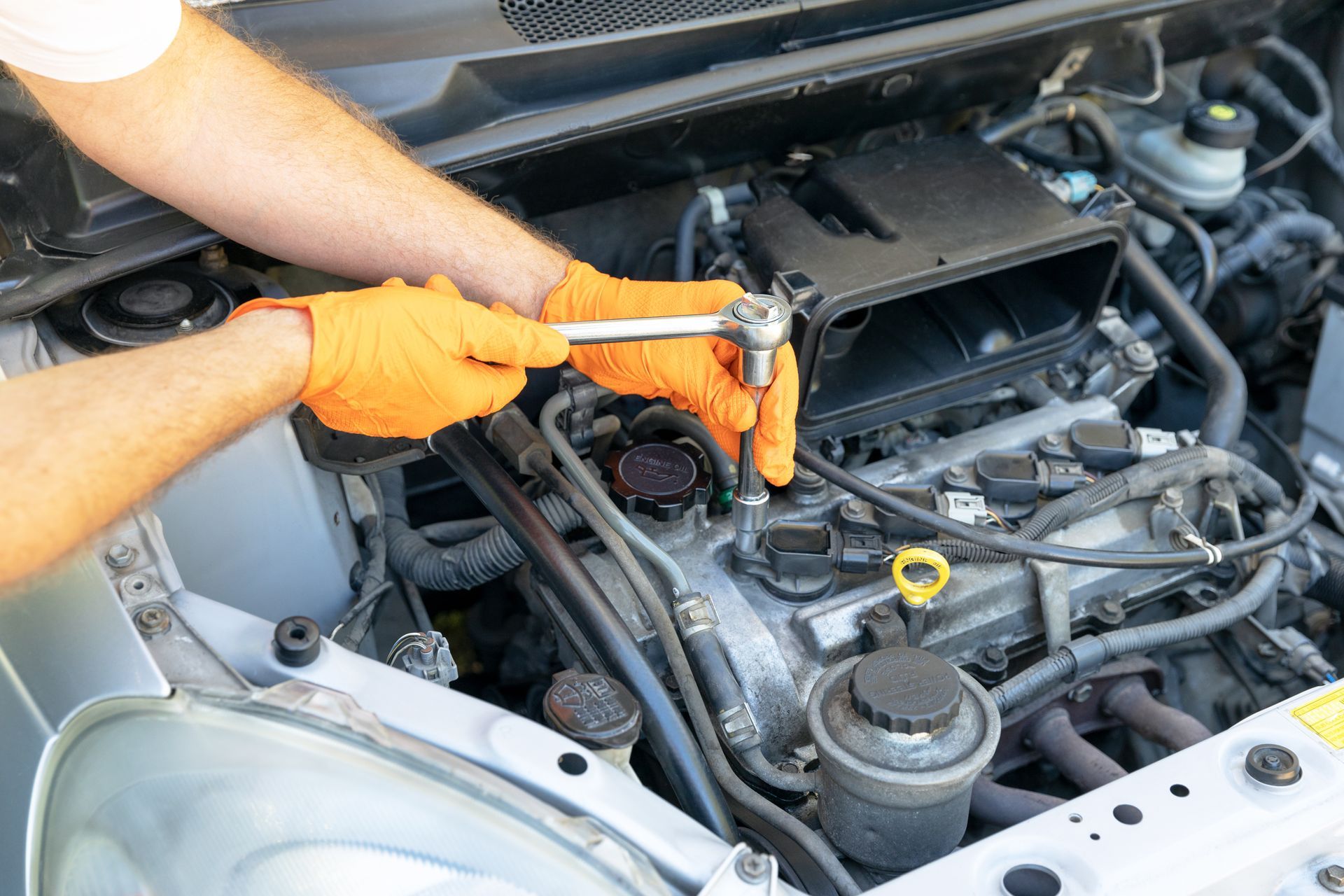
Many engines have seals around the tubes where the spark plugs and ignition coils sit. Those seals may be part of the valve cover gasket set or built into the valve cover itself. When they fail, oil collects down inside the spark plug wells instead of running down the outside of the engine.
You may never see a puddle on the ground. The first clue might be oil on an ignition coil when you remove the spark plugs, or an engine misfire after enough oil reaches the coil boot. During an inspection, we check whether the plug wells are dry because replacing spark plugs without addressing leaking tube seals can leave the new ignition parts sitting in oil again.
3. Camshaft Seals
Camshaft seals keep engine oil from escaping where the camshafts pass through the cylinder head. They’re less visible than a valve cover gasket, and on many engines they sit behind pulleys, timing covers, or other components.
Clues can include:
- Oil collecting near the end of the cylinder head
- Oil behind the timing cover
- Oil contamination around belts or pulleys
- A leak that becomes worse at higher engine speed
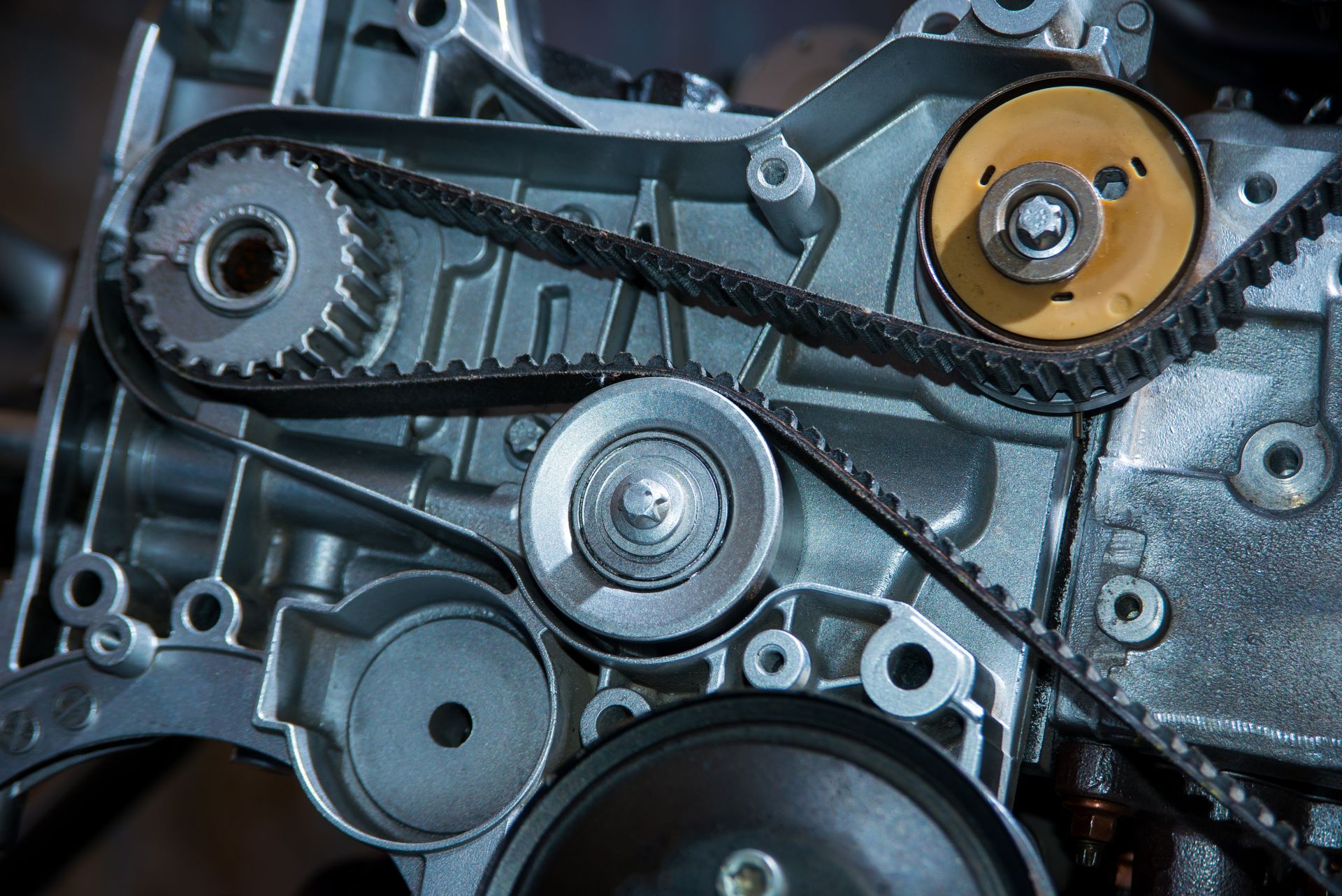
These leaks deserve careful diagnosis because oil can spread considerably once it reaches a spinning pulley. If the engine uses a timing belt, oil contamination is especially concerning because petroleum can damage belt material. A leak that looks small from outside the engine may be much more noticeable once you remove the timing covers.
4. Timing Cover Gasket or Seal
The timing cover closes off the area around the timing chain or belt, depending on the engine design. Some covers use a molded gasket, while others use liquid sealant applied at the factory. The upper corners and joints between the cylinder head, block, and cover are common areas to inspect when oil appears near the front of the engine.
Timing cover leaks can be tricky because the oil may travel downward and resemble an oil pan or front crankshaft seal leak. At our shop, we look for the highest wet point rather than assuming the lowest oily area is the source. Repair difficulty varies greatly too. On one engine, resealing a small upper cover may be straightforward. On the other hand, much of the front of the engine has to come apart.
5. Oil Filter Housing Gasket
On engines with an oil filter housing mounted high on the engine, the gasket between the housing and engine block or cylinder head can become another leak source. Heat hardens the seal over time, and pressurized oil can escape whenever the engine is running.
A leaking oil filter housing gasket can make a surprisingly large mess. Oil may run across the engine, coat nearby hoses, reach the alternator, or drip farther down, making the leak appear to come from somewhere else. Regular maintenance gives us a chance to spot dampness around the housing before the leak becomes heavy.
Not every engine uses the same filter housing design, so this gasket won’t apply to every vehicle. Also check the oil filter itself, the cap O-ring, and nearby pressure switches before blaming the housing gasket.
Get Engine Oil Leak Repair In Indianapolis, IN, With Pete's Service Center
If you’re seeing oil near the top of the engine, Pete's Service Center in Indianapolis, IN, can trace the leak to its source and check whether nearby belts, ignition parts, wiring, or exhaust components are affected.